blog


An Old World–inspired wine shop renovation in Calgary, reimagined for modern retail performance. The project featured phased construction to stay open, a signature tasting room, refined millwork and feature lighting, and a reorganized floor plan that elevates experience without overspending.
More Details on this Project >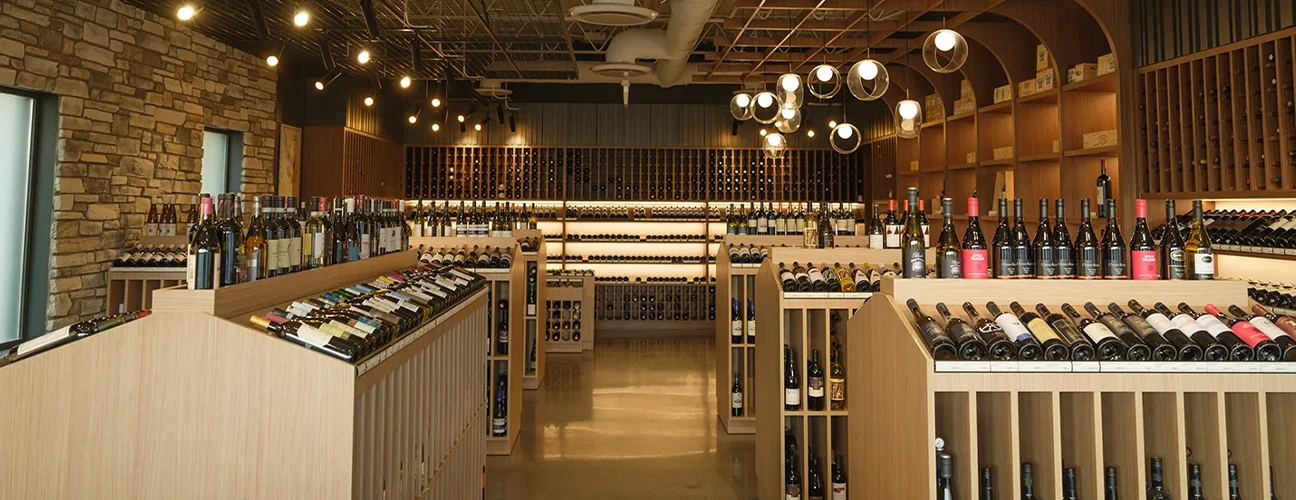



Richmond Hill Wines, a longtime Calgary wine shop, has reimagined 3,388 sq. ft. into a destination that pairs Old World romance with modern retail performance. This tenant improvement renewed the entire store: a full gut and refinish, selective reuse of demising walls across two bays, and the conversion of back-of-house storage into a high-end tasting room for events and education.
Phased construction helped to minimize the amount of time that the store had to be closed during construction. Aray led design and coordination with the client, contractor, and subconsultants to align vision, budget, and constructability. The final product is a space that feels storied and welcoming, reads premium without overspending, and sets a new revenue stream in the form of a tasting-room experience.
The challenge was both ambitious and clear: deliver a high-end, Old World atmosphere on a pragmatic budget, while maintaining operations as much as possible during construction. Aray was tasked with designing a space that would elevate the entire wine purchasing experience, including the addition of a memorable tasting room that unlocks a new revenue stream, all while completing the project in phases. Existing conditions included a tired T-bar ceiling, textured plaster from a previous tenant, and legacy infrastructure spread across two bays. Aray needed to maximize display density, improve staff sightlines, and integrate feature lighting and mechanical upgrades while keeping costs, permitting, and operations predictable.
“High-end doesn’t have to mean high-cost. By investing in a few decisive experiences and simplifying everywhere else, a legacy shop can become a destination.”
Aray started with conversations, renderings, and rapid pricing loops. Early concept visuals helped the client calibrate the precise “Old World winery, modern polish” they were after, including stone, warm wood, and weighty thresholds, all balanced by clean lighting and refined millwork. In parallel, the team modeled multiple value paths with the contractor and sub consultant, including where to invest (arrival, tasting room, key display moments) and where to simplify (reuse equipment, rationalize millwork, standardize lighting). Feature lighting was detailed and quantified early so tender numbers would reflect reality. Aray planned the build in phases, front-loading high-impact moves that keep retail open as much as possible, while leaning on lightweight tactics, including furring out over heavy textured walls instead of costly removal, to protect schedule and budget. Success, together, meant three things: a true destination tasting room, a more profitable and navigable retail floor, and a design that reads premium without overspending.
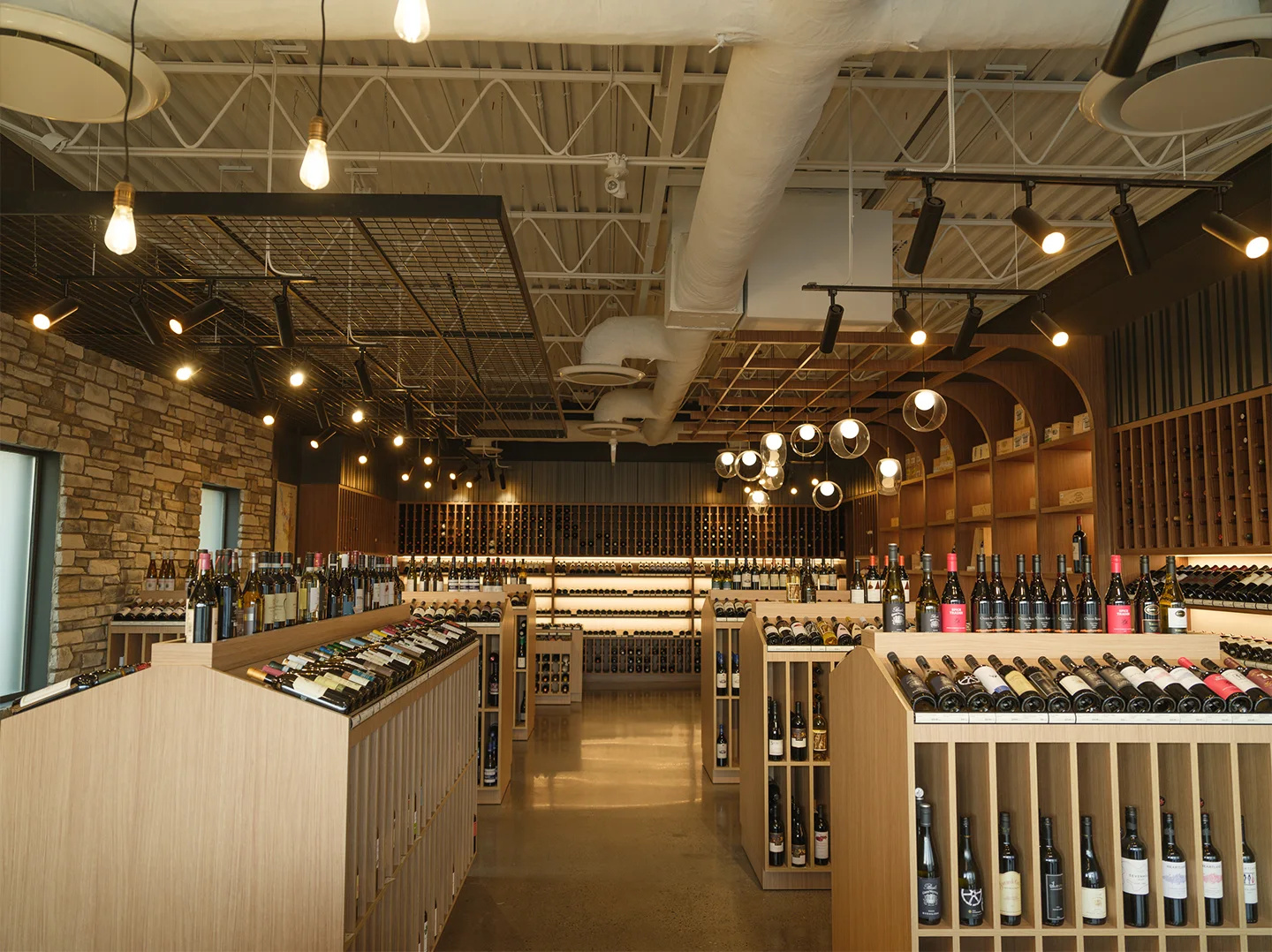
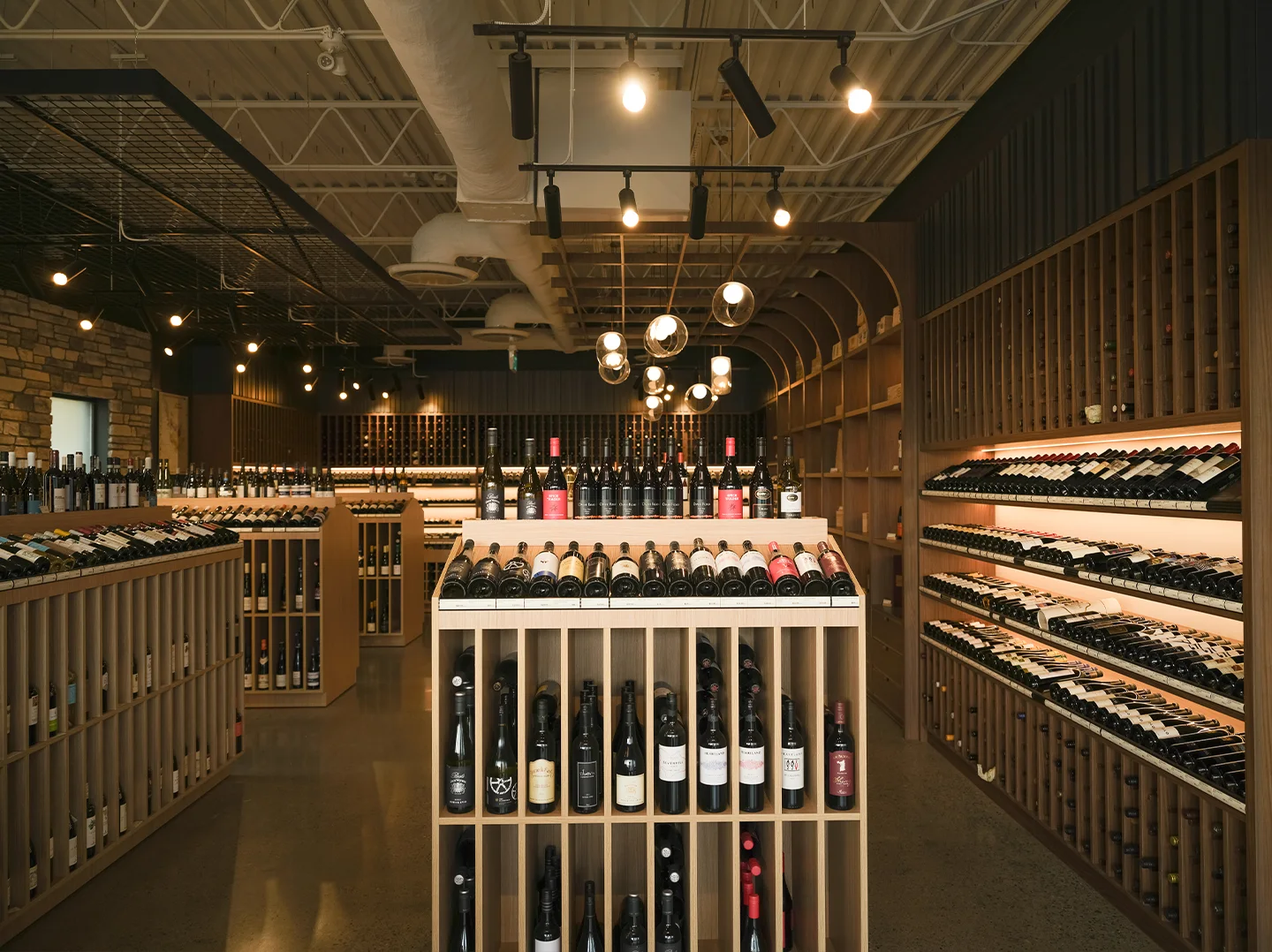
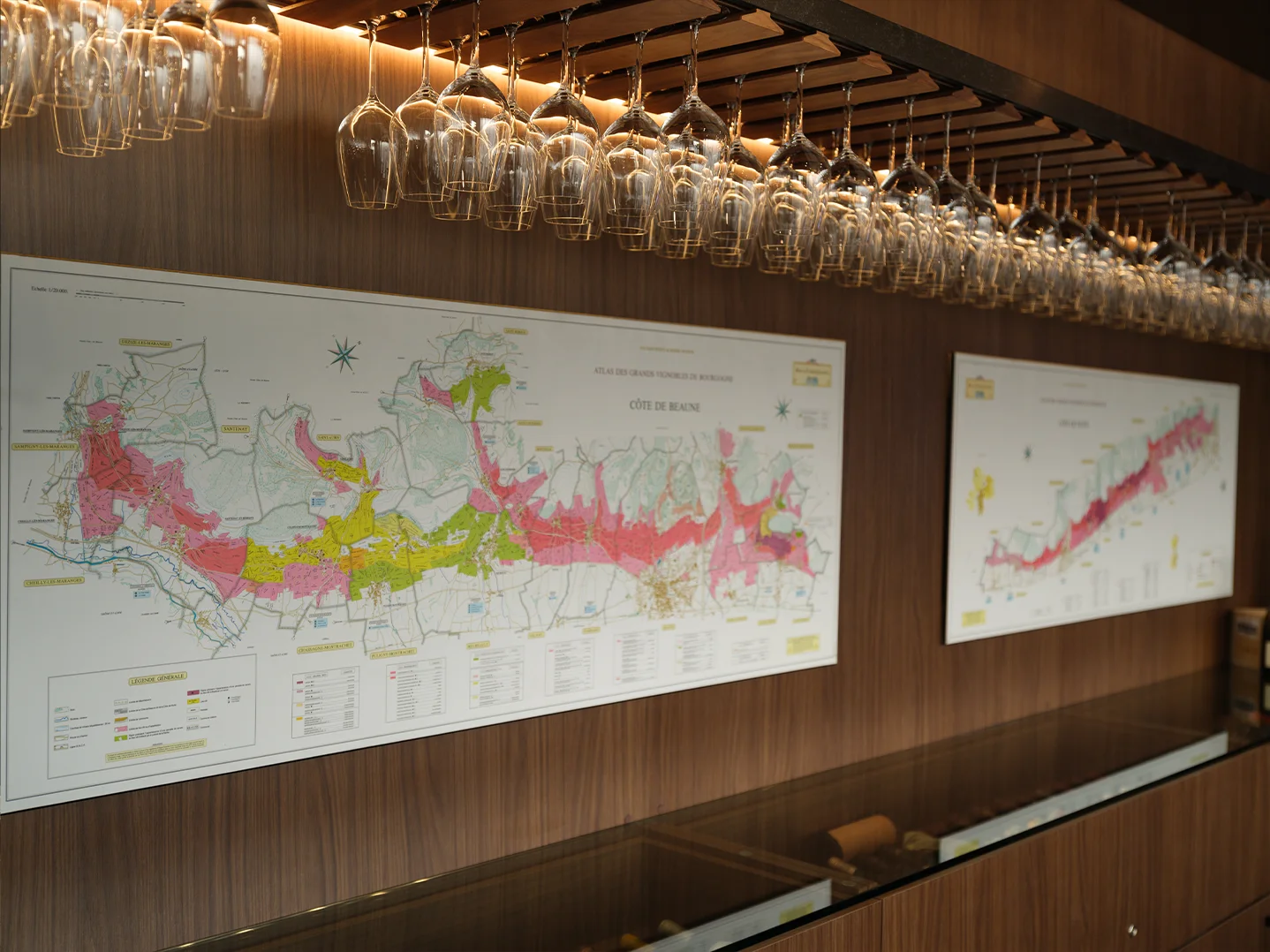
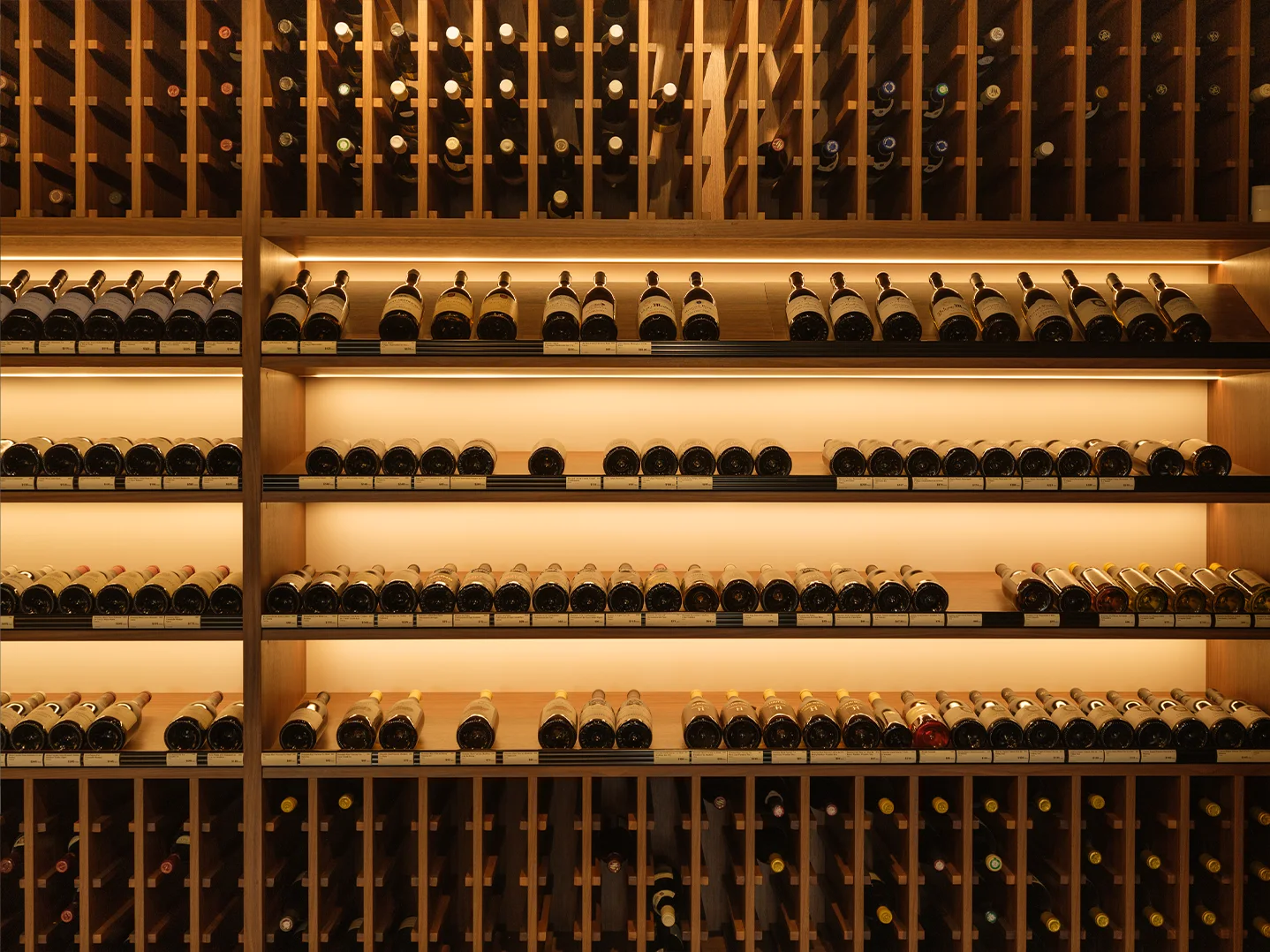
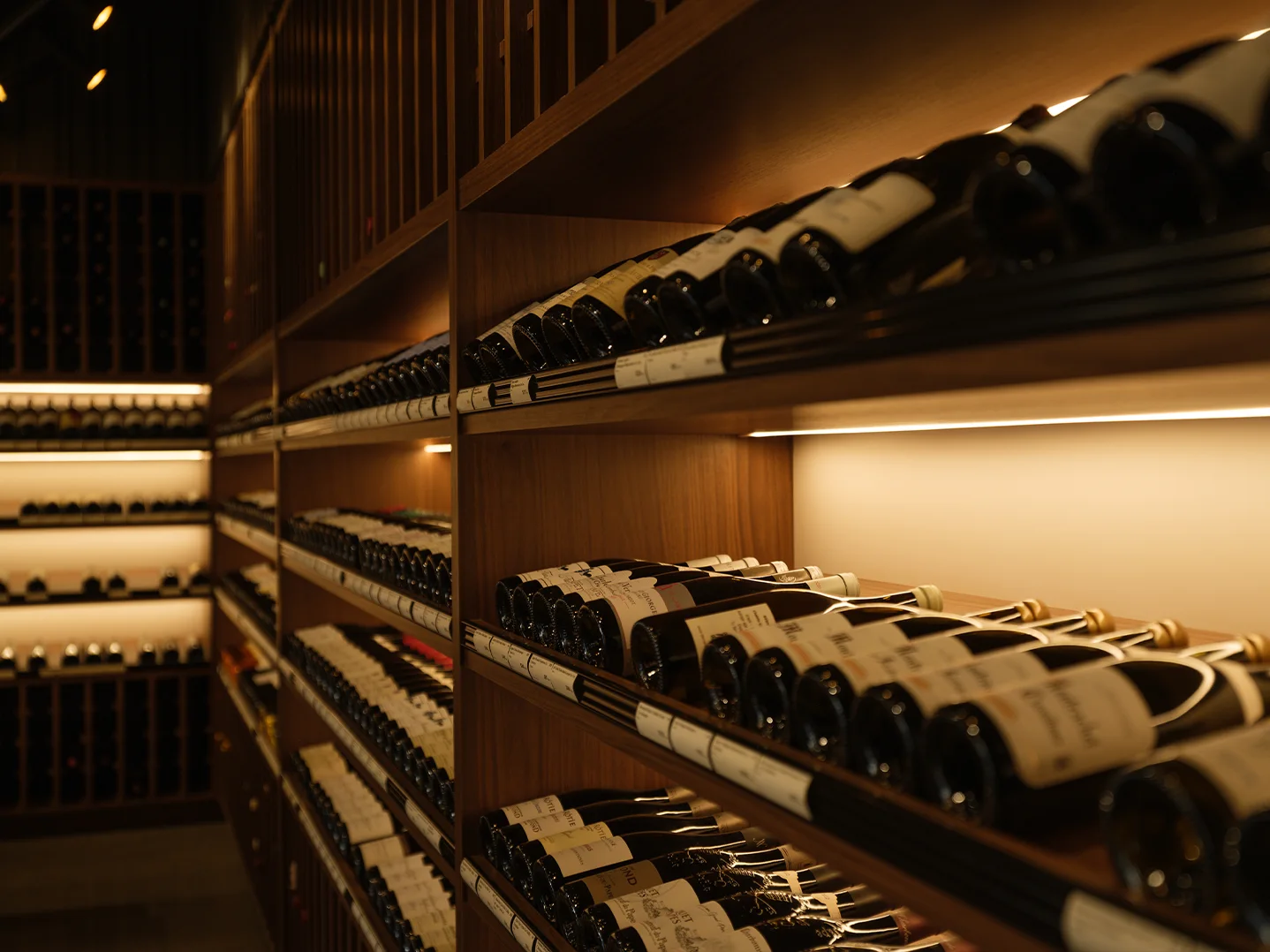
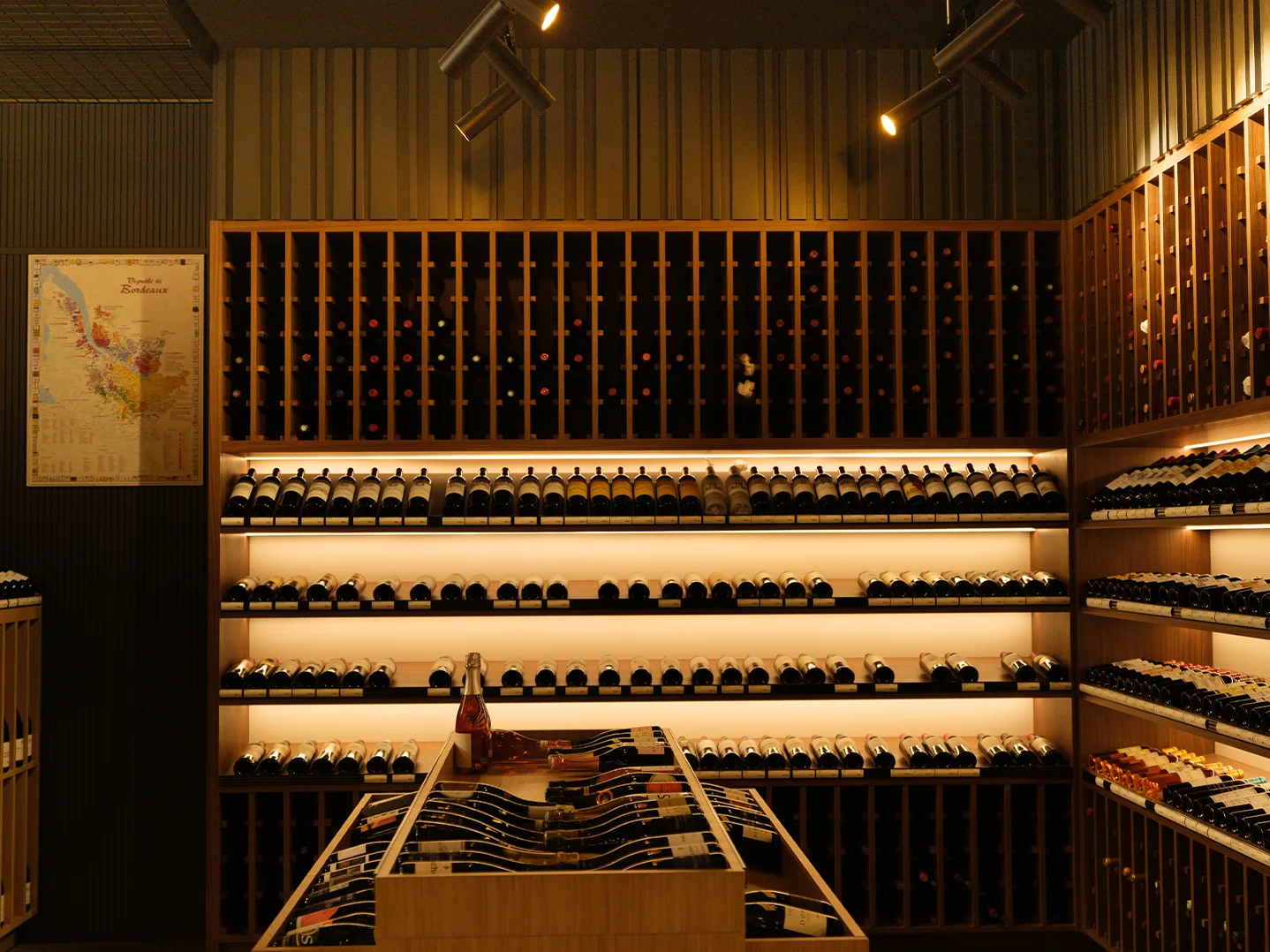
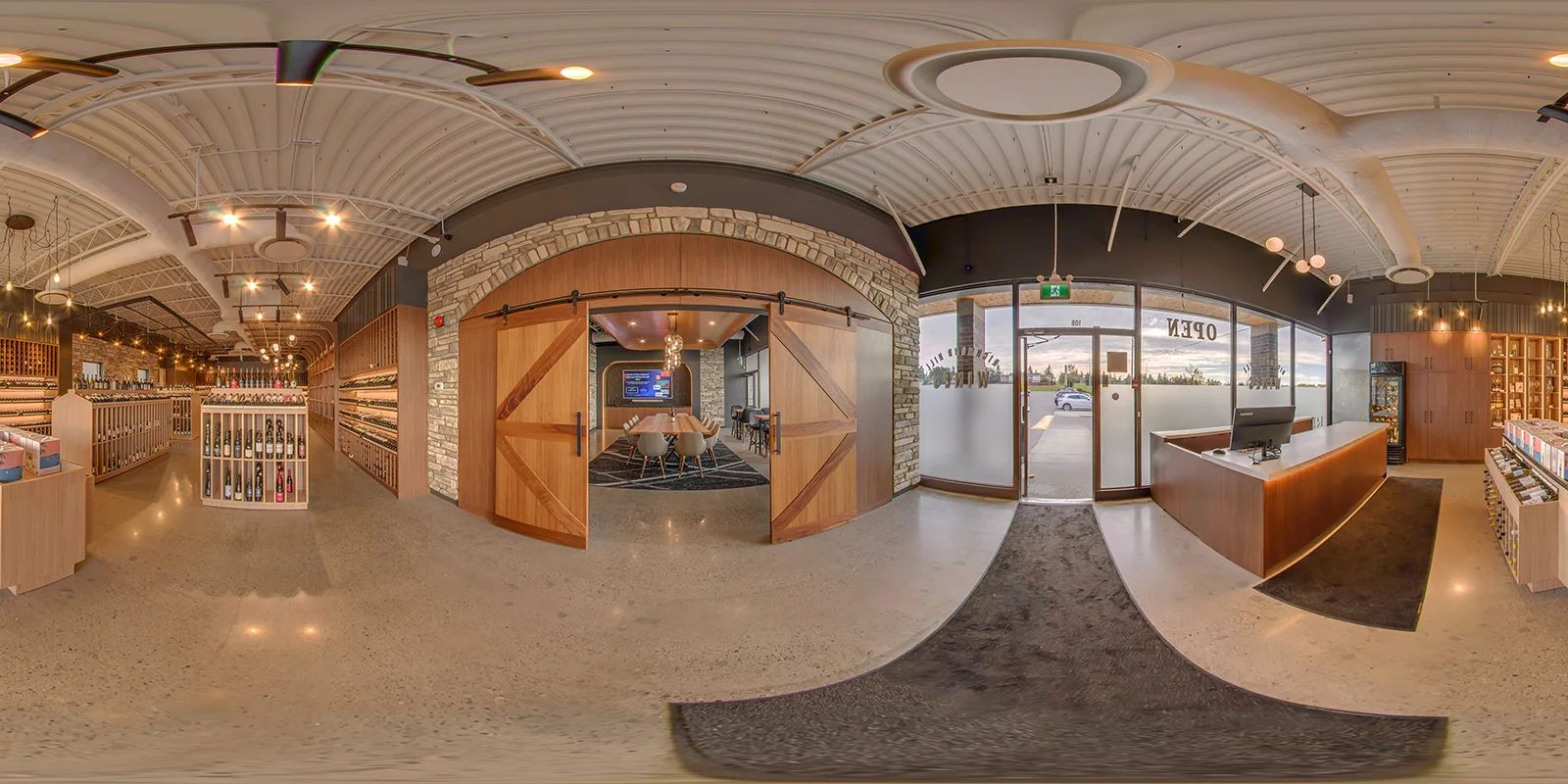
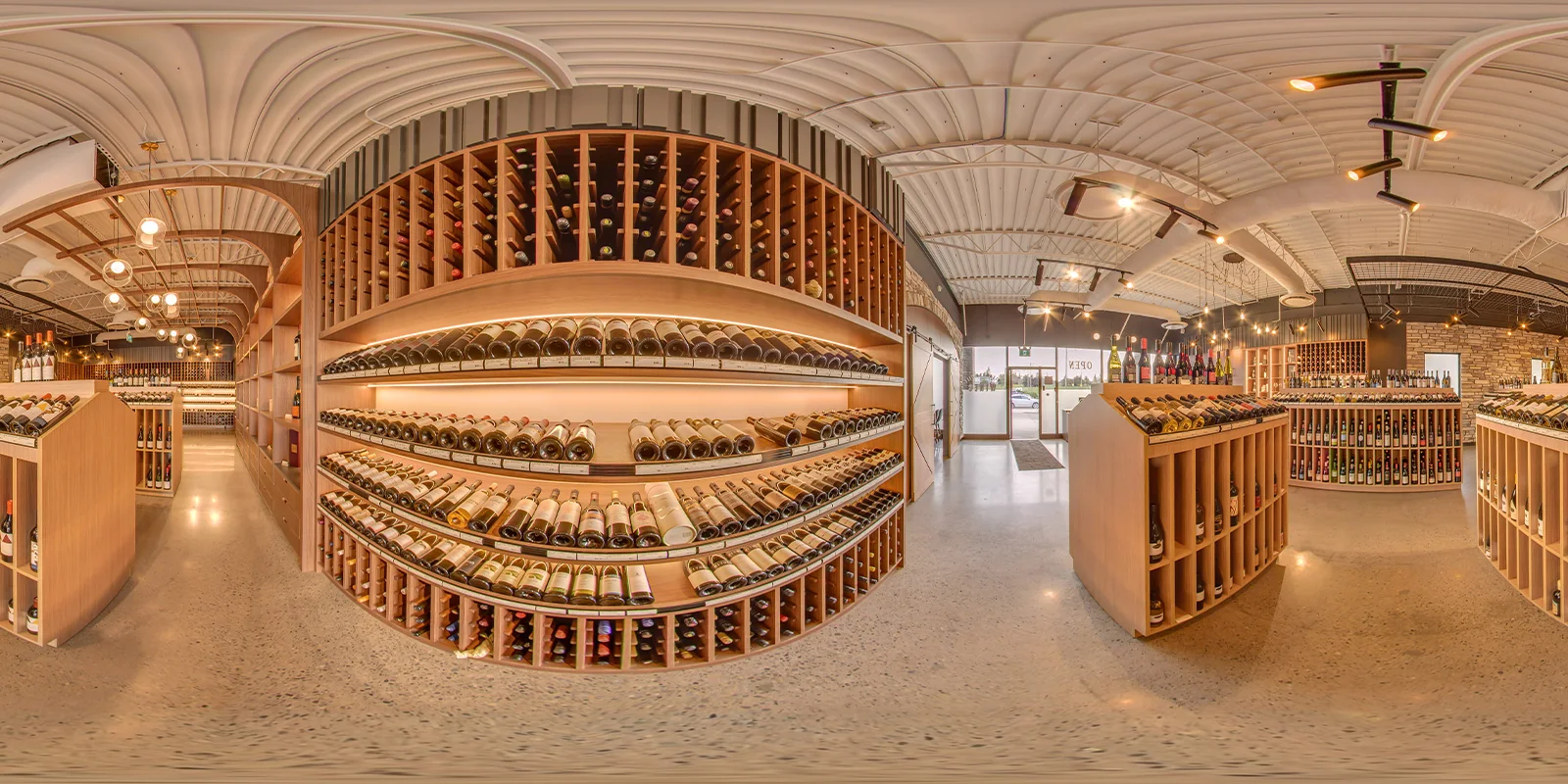
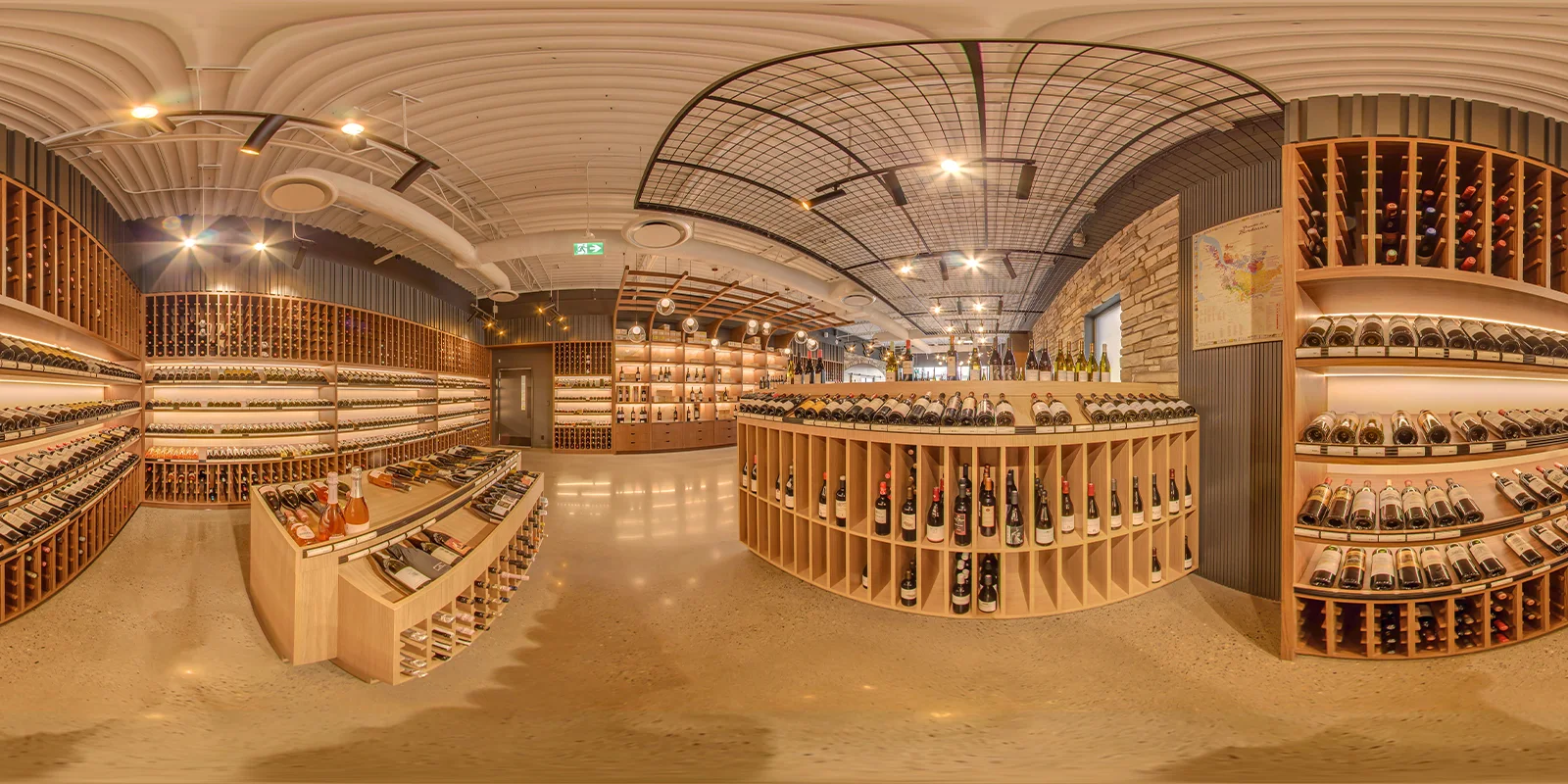
The store now greets guests with hospitality first. the point of sale (POS) was relocated to the entry so staff could welcome visitors and oversee the full retail floor; the former counter zone becoming a richly merchandised display. Overhead, the T-bar grid gives way to open, taller ceilings that lets the room breathe, lowering cognitive load and inviting guests to dwell. Along the perimeter, continuous custom shelving and integrated wine coolers increase capacity while keeping the palette consistent. The material language is tactile and timeless reflected through real stone veneer on feature walls, warm wood millwork, and polished concrete flooring with a soft sheen. A fine metal mesh canopy (ready for live or faux greenery) adds a subtle vineyard cue without clutter.
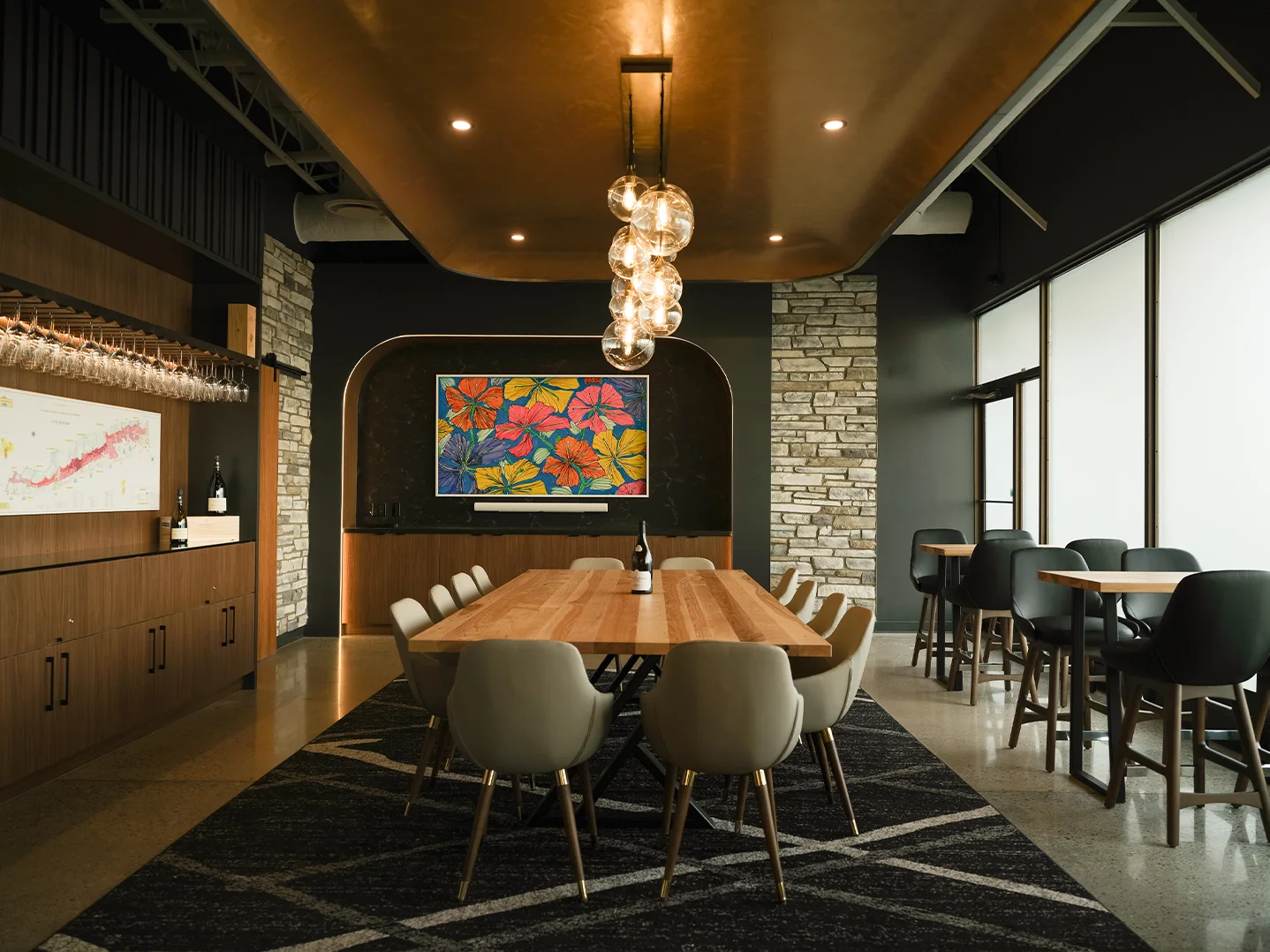
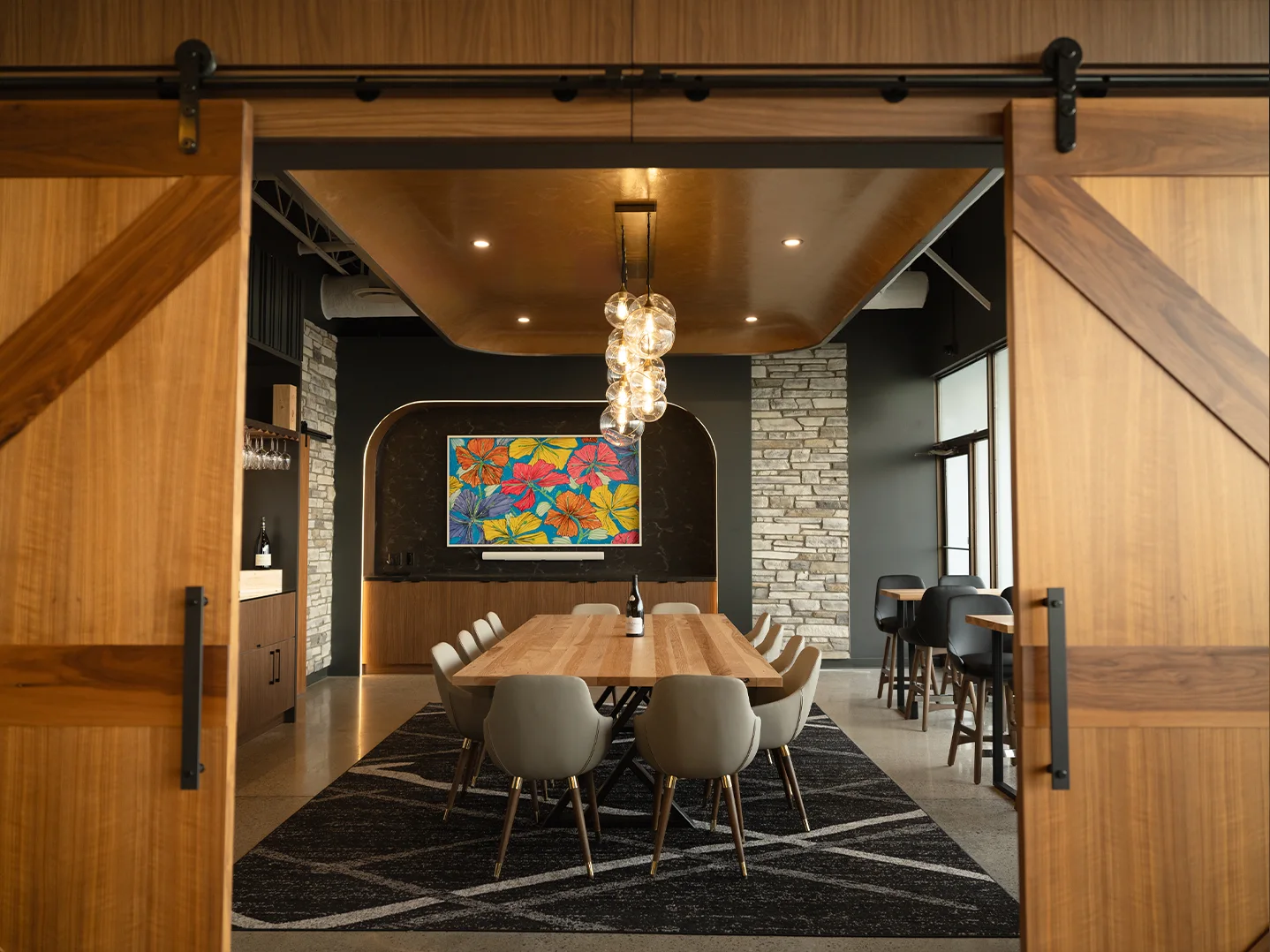
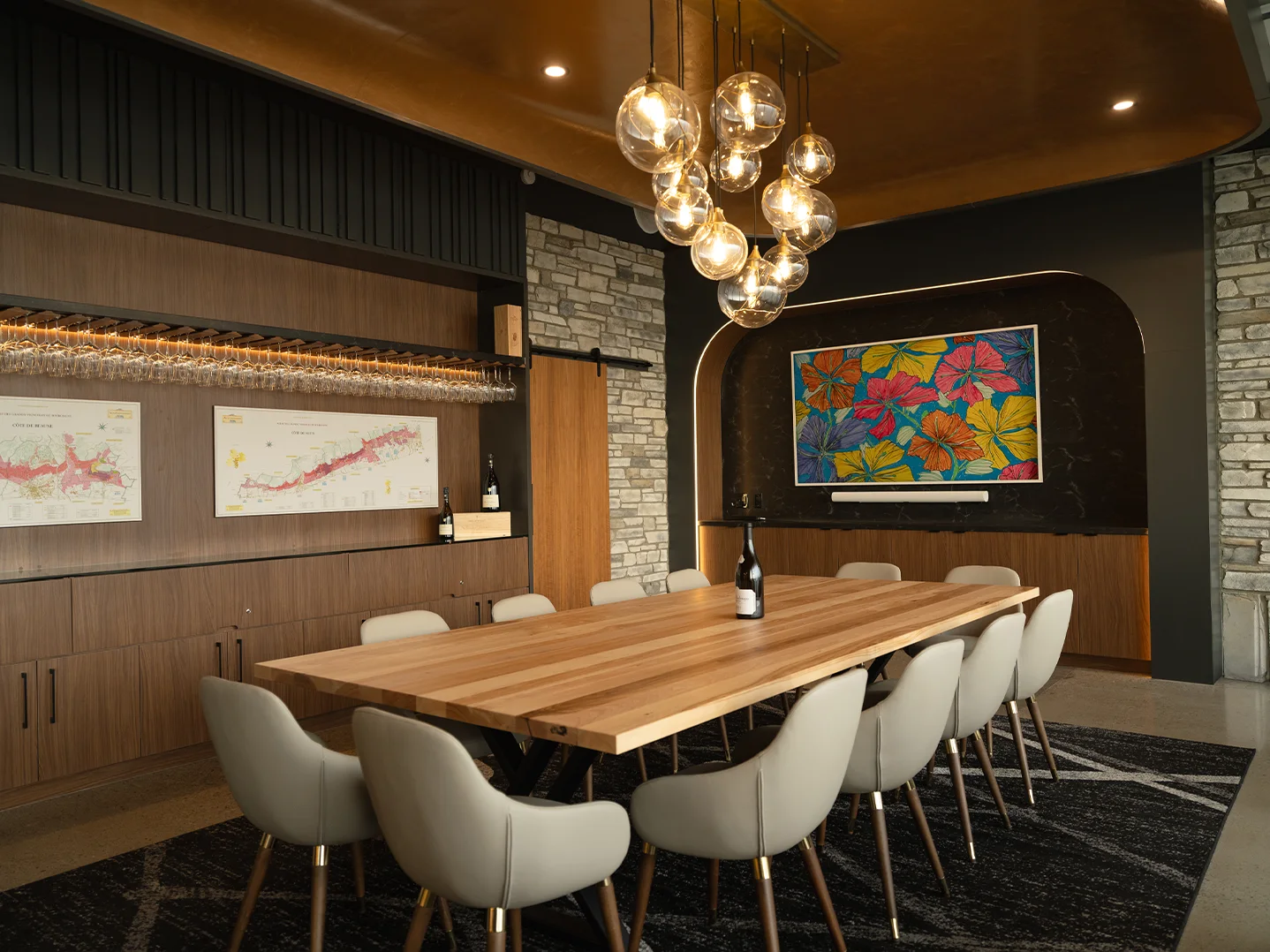
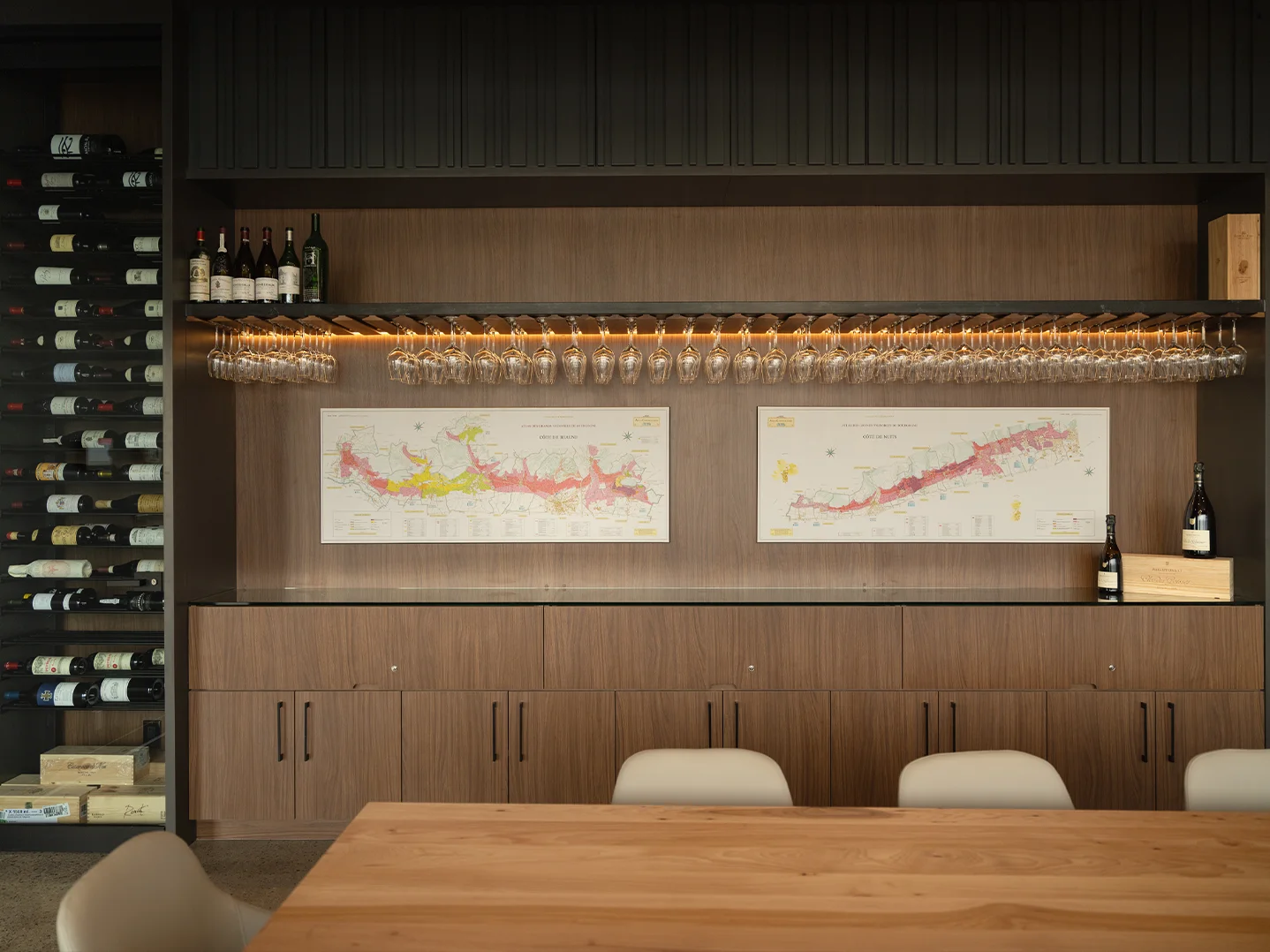
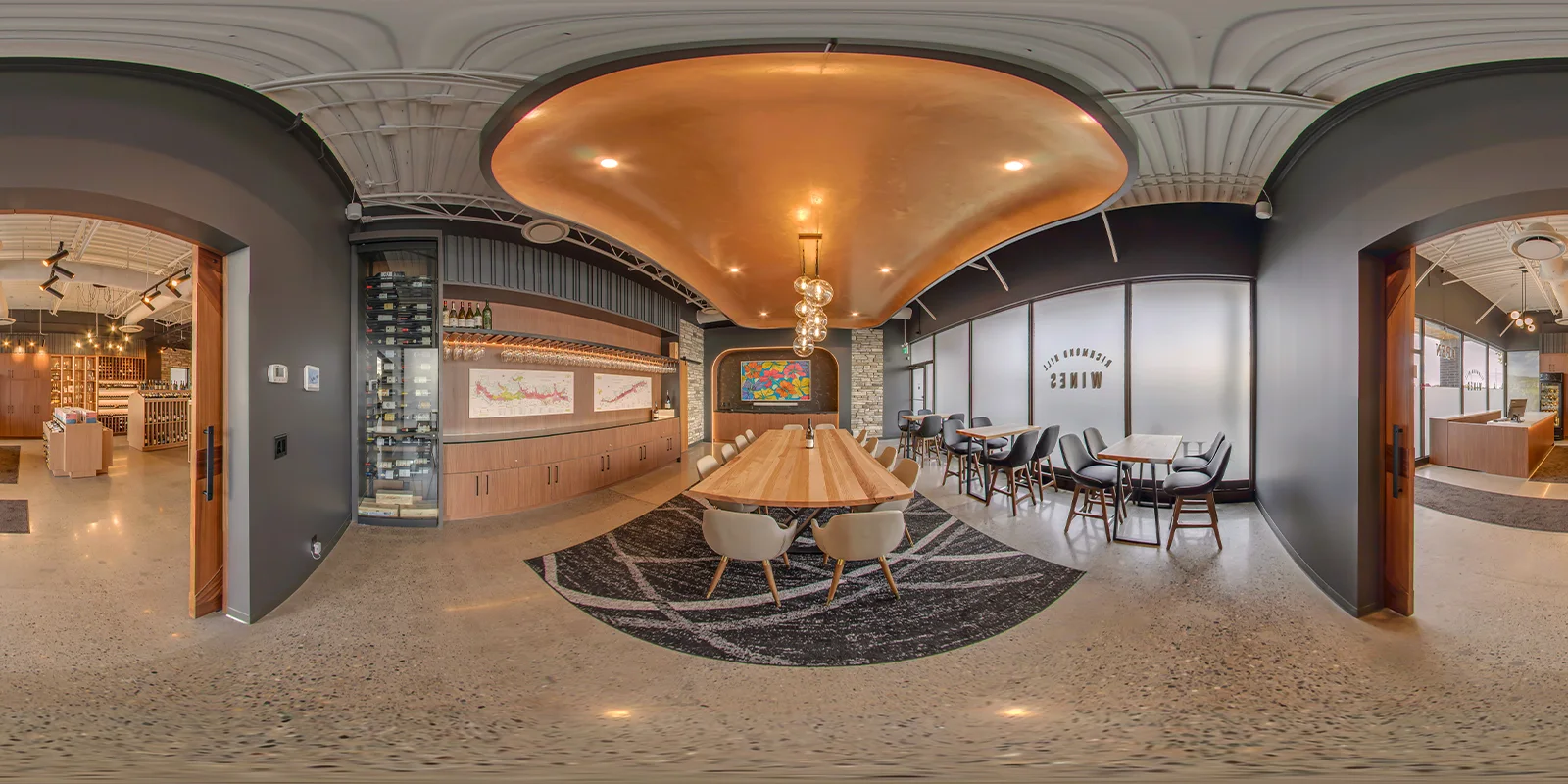
The tasting room is truly the crown jewel of this renovation project. Guests pass through a deliberately grand, barn-door threshold framed in stone and timber. Inside, a coved ceiling finished with a faint metallic wash lifts the light and provides a gentle shimmer, giving off the Old World mood but with present-day finesse. Hidden storage is tucked behind vertical paneling so the room remains elegant, while select existing coolers are rebuilt into millwork for continuity and budget.
Throughout, under-cabinet and accent lighting articulate bottles, while standardized drivers and circuits keep maintenance straightforward. Life-safety, accessibility, and system coordination are integrated from the onset, with clear travel paths, door hardware, and diffuser placements that support the feature ceiling, all resolved with YJE to ensure the experience and the engineering are aligned.
Side-by-side pricing exercises clarified the return on signature moments like the back-lit display wall, while identifying smart substitutions (squared millwork in select locations, alternative luminous materials) that protect the overall effect. Operationally, the plan anticipates an increase in walk-in traffic, smoother service (clear sightlines, better adjacencies), and a new event-driven revenue stream anchored by the tasting room. Now that the project is complete, tracking event bookings, average purchases, dwell time, and staff productivity will quantify impact and tune the playbook for future retail renovations.
High-end doesn’t have to mean high-cost. By investing in a few decisive experiences and simplifying everywhere else, a legacy shop can become a destination while avoiding unnecessary business interruptions. Early renderings align vision, while early engineering aligns numbers. Feature lighting deserves front-of-house attention and back-of-house discipline. And when renovating in place, considered reuse of walls, coolers, and infrastructure frees the budget to support the atmosphere that guests actually feel.
If you want an interior design firm that brings strategic thinking, licensed expertise, and creative clarity to complex projects, Aray provides the leadership to move your project forward with confidence.
Start the conversation today.